



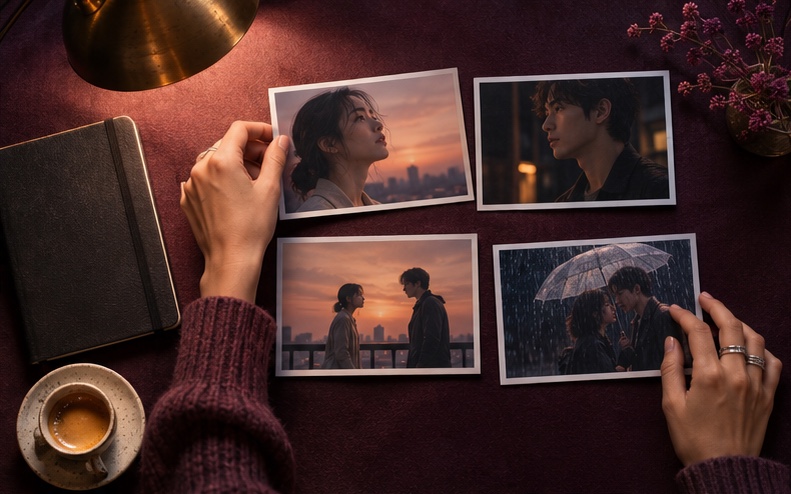



An AI short drama script is a screenplay for a short vertical episode, usually 60 to 180 seconds, written so that each line of action can become an AI video prompt. Great short drama scripts open with a hook in the first three seconds, deliver one clear story beat and end on a cliffhanger that makes viewers watch the next episode.
Key takeaways
- Structure every episode as Hook, Beat, Turn, Cliffhanger.
- Write action lines as shot descriptions so they double as prompts for AI video models.
- Keep dialogue short. Short lines lip-sync better and work for viewers watching muted with captions.
- Plan the season backwards from the big reveal so every episode moves toward it.
- Use a recurring character bible so AI-generated characters stay consistent.
Why Do Short Drama Scripts Need a Different Approach?
Short dramas are watched on phones, often with the sound off, between other things. Viewers decide in seconds whether to keep watching. That means traditional slow openings and long scenes do not work. AI production adds another constraint: most video models generate clips a few seconds long, so scripts need to be broken into clear, visual shots that a model can render.
Creators who get this right build loyal audiences. Solo creator Koikoi built the AI Grandma comedy series with AKOOL and reached 8M Instagram views and 1M YouTube views. Read the case study.
What Is the Structure of a Short Drama Episode?
- Hook (0 to 3 seconds): a striking image, line or reveal that stops the scroll.
- Beat (3 to 60 seconds): the one event this episode is about, such as a confrontation, discovery or decision.
- Turn (last third): something changes or goes wrong.
- Cliffhanger (final seconds): an unanswered question, a twist or a threat.
How to Write an AI Short Drama Script: Step by Step
Step 1: Write a One-Line Series Premise
Example: "A delivery driver discovers every package she drops off predicts tomorrow's news." A strong premise naturally produces many episodes.
Step 2: Build a Character Bible
List each main character's look, wardrobe, personality and speaking style. Create reference images with an AI image model such as Seedream 5.5 or Nano Banana 2, and reuse them in every episode.
Step 3: Outline the Season Backwards
Decide your biggest reveal and the episode where it lands. Then plan earlier episodes so each one adds a clue, a complication or a question.
Step 4: Open with a Visual Hook
The first shot must work without sound. Good hooks include a shocking close-up, an unexpected location, a line of on-screen text or a character doing something surprising.
Step 5: Write Action Lines as Prompts
Describe each shot with shot size, camera movement, subject, action and mood. For example: "Close-up, handheld, Mia opens the package, cold blue light spills onto her face, she freezes." This line can go straight into Seedance 2.5 or Kling 4.0 as a prompt with your character reference.
Step 6: Keep Dialogue Tight
Aim for lines under 12 words. Let visuals carry emotion. Short lines are easier to voice, lip-sync and caption.
Step 7: End on a Question
Finish with a line or image that raises a question the next episode answers. Avoid resolving everything; resolution belongs at the end of a season.
Free Template: 90-Second AI Short Drama Episode
Episode title: [Title]
Characters: [Names, linked to character bible]
Location: [One or two locations]
Shot 1 (Hook, 0 to 3s): [Close-up or striking visual]. On-screen text: [Short hook line]
Shot 2 to 4 (Setup, 3 to 20s): [Where we are, who wants what]
Shot 5 to 9 (Beat, 20 to 60s): [The main event of the episode, with two or three short lines of dialogue]
Shot 10 to 12 (Turn, 60 to 80s): [Twist or complication]
Shot 13 (Cliffhanger, 80 to 90s): [Unanswered question, reveal or threat]. Caption: ["To be continued" or episode tag]
How Do You Turn the Script into Video?
- Generate each shot with image-to-video from your character references, testing important shots on more than one model.
- Use AKOOL Face Swap to keep faces consistent across shots and episodes.
- Add voices and lip-sync dialogue shots, then burn in captions.
- Edit tightly with sound effects and music that signal tension.
- Localize successful episodes with AKOOL Video Translation.
Learn from AI Storytellers
- Mukhtar Luthfi used Seedance 2.5 on AKOOL for his BrainGlitch films, reaching 19 million views. Read the case study.
- Almost Peaceful turned real-life questions into a warm storytelling series with AKOOL. Read the case study.
- UNXIN STUDIO made an AI fan film that reached 228K views, with 91% of reach from non-followers. Read the case study.
Common Scriptwriting Mistakes
- Slow openings that explain instead of show.
- Too many characters or locations to keep consistent.
- Long dialogue scenes that are hard to lip-sync and watch muted.
- Episodes with no clear beat or cliffhanger.
- Using copyrighted characters or real people's likenesses without rights.
Conclusion: Write for the Scroll, Shoot with AI
The best AI short dramas are written for how people actually watch: fast hooks, one strong beat and a reason to come back. Write each shot like a prompt and your script becomes your production plan. Start generating your first episode with Seedance 2.5 on AKOOL.
Related Use Cases
Frequently Asked Questions
How long should a short drama script be?
A 60 to 90 second episode usually needs 10 to 15 shots and only a few lines of dialogue. Most short drama episodes run between one and three minutes.
Can AI write short drama scripts?
AI can help brainstorm premises, beats and dialogue, but the strongest series still come from a human creative vision. Use AI for drafts and variations, then edit for voice and pacing.
What makes a good hook?
A good hook works in the first three seconds without sound: a surprising image, a bold line of on-screen text or a moment of conflict.
How do I keep AI characters consistent across episodes?
Use a character bible with fixed reference images and descriptions, reuse them in every prompt and correct faces with face swap when needed.
How many episodes should a season have?
Many creators start with 10 to 20 short episodes. That is enough to build a story arc while testing what the audience responds to.