



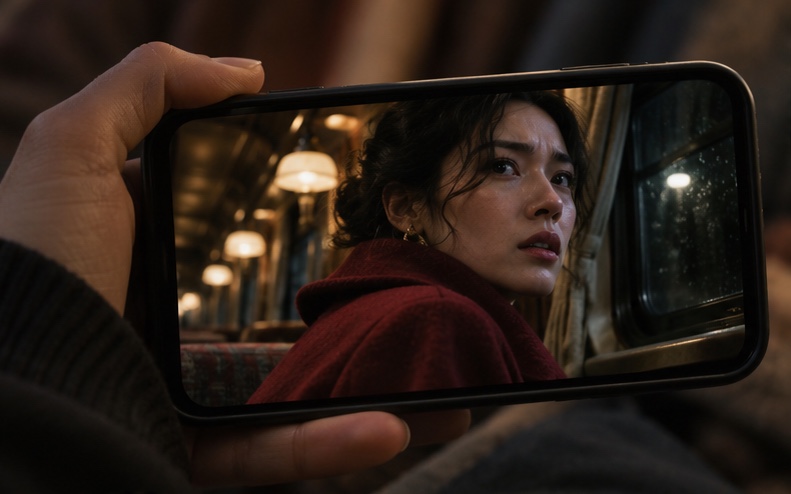



An AI short drama is a serialized story told in short vertical episodes, often 1 to 3 minutes each, made for phones and platforms like TikTok, Instagram Reels and YouTube Shorts, with AI generating some or all of the shots, characters and voices. AI makes it possible for a single creator or small studio to release episodes on a regular schedule, which is what builds a returning audience.
Key takeaways
- Short dramas win on consistency and cadence: recurring characters, a clear hook in every episode and a regular release schedule.
- Build a character bible with reference images before episode one.
- Write each episode around one hook in the first seconds and one cliffhanger at the end.
- Create a reusable workflow so every episode follows the same production steps.
- Localize successful series with AI dubbing and lip-sync to reach new markets.
Why Are Short Dramas Growing So Fast?
Vertical short dramas, sometimes called micro-dramas, have become a major format in mobile entertainment. Viewers watch episodes in spare moments, and cliffhangers bring them back for the next one. The challenge has always been cost: live-action series need casts, crews and locations for every episode.
AI changes who can make them. Creators can now produce recurring characters, varied settings and dramatic moments without a set. Japan-based Avita partnered with AKOOL on face swap, AI avatars and web integration to bring TikTok short dramas to a global audience. Read the case study.
What Makes a Short Drama Work?
- A hook in the first seconds: a reveal, a conflict or a striking image that stops the scroll.
- Recurring, recognizable characters: viewers return for people they know.
- One clear beat per episode: each episode moves the story forward by one event.
- A cliffhanger: end on a question that makes the next episode feel necessary.
- A reliable schedule: regular releases train the audience to come back.
How to Produce an AI Short Drama Series: Step by Step
Step 1: Choose a Genre and a Premise
Popular genres include romance, revenge, comedy, fantasy and mystery. Pick a premise you can extend over many episodes, and write a one-line logline for the series.
Step 2: Build a Character Bible
Design each main character with an AI image model such as Seedream 5.5 or Nano Banana 2. Create front, side and expression views, plus key costumes. Save these references and use them in every episode. Keep the main cast small at first.
Step 3: Outline a Season
Plan 10 to 20 short episodes with one beat each. Map where the big reveals and cliffhangers fall so the series has momentum.
Step 4: Write Vertical-First Scripts
Write for a 9:16 screen. Favor close-ups and medium shots, keep dialogue short and make sure the story is clear even with the sound off, using captions.
Step 5: Generate Shots with a Repeatable Workflow
Use your character references to generate each shot with image-to-video. Models such as Seedance 2.5, Kling 4.0 and Google Veo can handle different kinds of shots, so many creators pick a primary model and use others for specific moments. Use AKOOL Face Swap to keep faces consistent from episode to episode.
Step 6: Add Voices, Lip-Sync and Captions
Give each character a consistent voice, lip-sync dialogue shots and add burned-in captions, since many viewers watch muted.
Step 7: Edit for Pace
Cut tight. Remove any shot that does not move the story. Add music and sound effects that signal tension or comedy.
Step 8: Release, Measure and Localize
Track retention, completion and follows per episode. When a series takes off, translate it with AKOOL Video Translation to release the same episodes in new languages.
What Can You Learn from AI Series Creators?
- Koikoi, a solo creator, used AKOOL AI video generation to build the AI Grandma comedy series, reaching 8M Instagram views and 1M YouTube views. Read the case study.
- Mukhtar Luthfi used Seedance 2.5 on AKOOL for his BrainGlitch films, which reached 19 million views. Read the case study.
- Almost Peaceful turned marriage-prep questions into a warm social storytelling series with AKOOL Text-to-Image and Image-to-Video. Read the case study.
- Seikh Nabab Uddin turns ambitious AI concepts into finished videos in hours with AKOOL. Read the case study.
What Common Mistakes Should You Avoid?
- Starting with too many characters to keep consistent.
- Episodes with no hook in the first seconds.
- Irregular releases that break audience habits.
- Faces and costumes that change between episodes.
- Using real people's likenesses or copyrighted characters without rights.
Conclusion: Build a Series, Not Just a Clip
Single viral clips are hard to repeat. A series with recognizable characters, strong hooks and a steady schedule builds an audience that comes back. AI makes that cadence realistic for small teams. Start your first episode with Seedance 2.5 on AKOOL.
Related Use Cases
Frequently Asked Questions
How long should a short drama episode be?
Most vertical short drama episodes run from about one to three minutes. Shorter episodes with a strong hook and cliffhanger tend to suit mobile viewing.
How do I keep AI characters the same across episodes?
Use a fixed set of reference images for each character, keep prompt descriptions identical and use face swap to correct any drift.
Can one person produce an AI short drama?
Yes. Solo creators like Koikoi have built successful AI series. A repeatable workflow is what makes regular releases possible.
Can I release my series in other languages?
Yes. AI video translation can dub and lip-sync episodes so the same series can reach audiences in new markets.
Do I need to disclose that a series uses AI?
Many platforms ask creators to label realistic AI content. Check each platform's current rules and the laws in your audience's markets.