



How short-form AI creator Karan Sonkar combines experimentation, emerging AI models and AKOOL to turn ambitious visual ideas into cinematic content.
Creator: Karan Sonkar
Instagram:@thekaransonkar
Content: AI-generated short-form video, Instagram Reels & YouTube Shorts
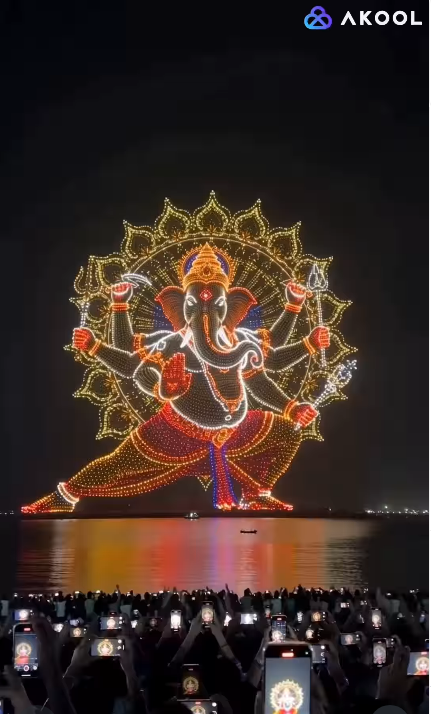
Featured AKOOL Creation:What if the sky itself began building Lord Ganesha?
Turning an Impossible Idea Into a Cinematic Short
What if thousands of drones rose into the sky and, piece by piece, formed Lord Ganesha? Feet first. Then the body. The face and crown. And finally, each arm appearing until the complete figure was revealed.
It's the kind of visual concept that would be extraordinarily difficult to produce in the real world.
For AI creator Karan Sonkar, that was exactly the point.
For AKOOL's Creator Clash, Karan used the AKOOL ecosystem to transform the idea into a cinematic AI short and shared it with his audience on Instagram.
The response was significant. The Reel generated 834K likes, 1.9K comments and 14.2K reposts, demonstrating how an imaginative concept paired with AI filmmaking can capture an audience at scale.
But Karan didn't begin as an experienced AI filmmaker. His journey started with experimentation.
Learning AI Video by Creating
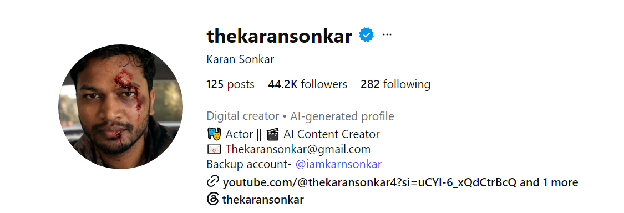
Karan creates short-form content primarily for Instagram Reels and YouTube Shorts, with a particular focus on AI-generated visuals and creative experimentation.
His introduction to AI video began with Kling 3.0. At the time, he was completely new to AI-generated video. There wasn't an established workflow. There was simply curiosity.
“When I first started with AI-generated video, I was also completely new to it.”
So he started experimenting. As AI video technology evolved, so did his process.
Karan began exploring Seedance 2.0 and later Seedance 2.5, testing what newer generations of video models could bring to his ideas.
He also expanded beyond video. Today, image-generation models including GPT Image 2, Nano Banana Pro and Seedream 5 Pro have become part of his creative toolkit.
The result is a workflow that doesn't depend on a single model. Instead, Karan chooses and combines tools based on the idea he wants to create.
Building a Multi-Model Creative Workflow
Karan's process moves between AI image generation and AI video generation. Images can help him establish an initial concept, character, environment or visual direction. Video models allow him to take those ideas further and introduce movement, scenes and cinematic storytelling.
Different models can be tested for different parts of the process.
“Each one has its own strengths, and trying new tools gives me more creative possibilities.”
That approach reflects an important shift happening in AI filmmaking. Creators no longer necessarily need to choose one AI tool and build their entire workflow around it. Instead, the creative process can become an ecosystem.
The question isn't simply: “Which AI model should I use?” It's: “What am I trying to create, and which tools will help me get there?”
Adding AKOOL to the Creative Toolkit
Karan discovered AKOOL because he was already constantly experimenting with new AI video platforms and models. He wanted to see what another AI-powered creative environment could add to his workflow.
AKOOL became a platform he could use to experiment with video concepts and develop short-form content. What he values most is the flexibility.
“What I like most is the flexibility to experiment with AI-generated content.”
For a creator producing Reels and Shorts, that ability to experiment quickly matters. Not every idea needs to become a full production. A creator can try something. See it. Change it. Push it further. Or move on to the next concept.
AI dramatically lowers the barrier to that experimentation.
Creating What Traditional Production Makes Difficult
Karan's Lord Ganesha concept is a good example. The idea imagines thousands of drones assembling an enormous figure of Lord Ganesha in the sky. Producing something at that scale physically would require enormous resources—if it were feasible at all.
With AI, Karan could approach the idea differently. Start with the concept. Develop the visuals. Experiment with the execution. Turn the idea into motion.
“Instead of needing a complete production setup, I can start with an idea and use AI to turn that concept into a video.”
That's particularly powerful for independent short-form creators. Traditional production forces creators to consider the cost of an idea before they ever see it. AI gives them an opportunity to see the idea first.
From Experiment to 834K Likes
The finished Creator Clash video asked viewers to imagine something that didn't exist: What if the sky itself began building Lord Ganesha?
The AI-generated concept was explicitly presented as an artistic visualization rather than footage of a real drone show. And audiences responded.
Beyond the numbers, comments on the Reel repeatedly described the visual as giving them “goosebumps,” while others asked about the prompt and how the piece was created.
For Karan, it shows what's possible when AI isn't simply used to reproduce familiar content. It becomes a way to visualize an idea audiences haven't seen before.
More Ideas. Faster Experimentation.
The biggest impact AI has had on Karan's work isn't tied to a single model. It's the ability to experiment.
“AI has allowed me to experiment with more ideas and create content more efficiently.”
That matters because creative work is inherently iterative. Some concepts work. Some don't. Others evolve into something completely unexpected.
Reducing the time and resources required to test an idea gives creators more opportunities to discover the ones worth pursuing. For Karan, the progression from Kling to Seedance, image-generation models and AKOOL has continually expanded what's available in his creative toolkit. And as the models improve, so does the range of ideas he can explore.
His Advice to New AI Creators: Start Creating
Karan's advice for creators entering AI video is straightforward: Don't wait until you understand everything. Experiment. Try different models. Learn what each one does well. And keep creating.
“Every model has different strengths, and experimenting is one of the best ways to discover your own creative workflow.”
AI is moving too quickly for creators to assume today's workflow will be tomorrow's workflow. The willingness to experiment may ultimately be more valuable than mastering any single model.
But Karan also emphasizes something even more important. AI is the tool. The creator still needs the idea.
“Most importantly, use AI as a creative tool. Your idea and creativity are still what make the content unique.”
When Imagination Becomes the Production Budget
Perhaps the biggest change AI filmmaking creates is not simply faster production. It's that creators can begin with ideas they previously might have dismissed as impossible.
A giant figure forming in the sky. A world that doesn't exist. A character no camera has ever filmed.
The traditional question was: “How could I possibly produce this?” AI is increasingly allowing creators like Karan to ask a different question: “What do I want to create?” And then start creating it.
Creator snapshot
Karan Sonkar — @thekaransonkar
Focus: AI-generated short-form storytelling
Platforms: Instagram Reels + YouTube Shorts
AKOOL use case: AI video generation and cinematic short-form content
Featured AKOOL creation:What if the sky itself began building Lord Ganesha?