

What must a language acceptance test establish?
Approve presenter output market by market against agreed meaning, terminology, pronunciation and timing criteria. Assign qualified reviewers, define release-blocking errors, and require retesting before rollout. An acceptance matrix and market sign-off record should identify what passed, who approved it, and which script and output versions the decision covers.
Language availability is a starting condition. Acceptance asks whether this particular message works for its intended audience. A supported language does not establish that a product name is pronounced correctly, a number retains its meaning, or a call to action matches the local offer.
Define the release scope before the pilot: market, audience, script, channel and message. Separate linguistic correctness from delivery preferences. A reviewer may prefer a warmer tone without finding a meaning error. A fluent performance can still state the wrong price. Keep those findings separate so production knows what must change before release.
Who should own each review decision?
Assign three roles before generating the first sample. One person may hold more than one role if qualified, but every decision needs a named owner.
| Role | Responsibility | Decision to record |
|---|---|---|
| Qualified market reviewer | Assess meaning, natural phrasing, pronunciation and audience suitability | Whether the target-language delivery is acceptable |
| Subject expert | Verify technical terms, product facts, numbers, units and approved claims | Whether the message remains factually correct |
| Release owner | Confirm closed blockers, permitted use and the approved output version | Whether the asset can be released within its scope |
Give reviewers the source script, approved glossary, target-market offer and intended meaning. Knowing both languages helps, but the reviewer also needs the relevant product and audience context. A subject expert should resolve a disputed technical term; the market reviewer should confirm that its spoken form is understandable locally.
Set an escalation path for disagreements. Record the disputed line, alternatives, decision owner and approved resolution. Do not let the producer choose between contradictory comments without authority. Preserve stylistic preferences as non-blocking suggestions unless they breach an agreed delivery requirement.
What should a representative test script contain?
Choose a short script that exposes real production risks. An easy greeting alone will not test the terms and numbers that matter in the campaign. Include representative content while keeping the pilot small enough for careful review.
Use this script checklist:
- Brand names, product names, acronyms and any required untranslated terms.
- A quantity, decimal, date, unit or other number used in the actual message.
- A technical term with an approved target-language equivalent.
- A call to action that matches the market's real next step.
- A phrase with difficult pronunciation or a context-dependent meaning.
- A line that must align with a visible label, caption or on-screen action.
Illustrative test line: “Review the 2.5-liter specification for Model Q7, then request a demonstration before 14 December.” This invented line tests a decimal, unit, model identifier, date and action. Replace it with approved campaign facts before production; it is not an AKOOL test result or an actual product offer.
Agree on the intended reading of each difficult element. Record whether a model identifier is spoken as letters and digits, and which local date and number conventions apply. These choices belong in the versioned glossary.
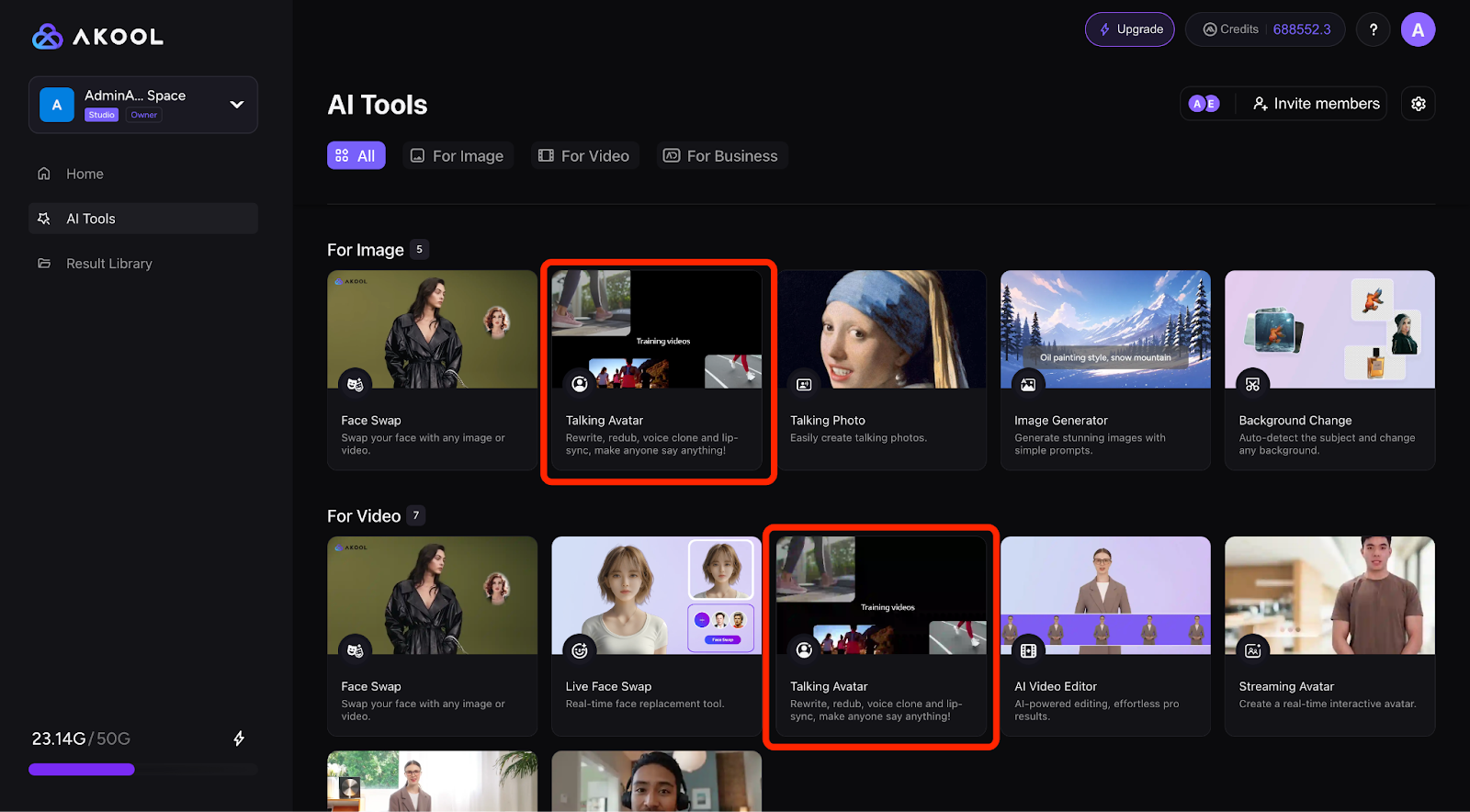
AKOOL's presenter input guidance describes script and audio input routes. Select an appropriate route for the pilot, then review the resulting asset against the same acceptance criteria. Confirm available controls in the account before committing to a correction method.
Which errors should block acceptance?
Use buyer-defined pass conditions tied to the message. The matrix below is an editorial template, not an AKOOL quality score or a claim that a language pair has been tested.
| Check | Pass condition | Illustrative severity | Evidence and correction owner |
|---|---|---|---|
| Meaning | Intended action and claim are preserved | Blocker: a negation or instruction changes | Timestamp and approved source line; market reviewer |
| Glossary | Required product and technical terms match the approved glossary | Blocker if identity or meaning changes; otherwise classify by impact | Spoken term and glossary entry; subject expert |
| Pronunciation | Important names and terms are understandable to the audience | Blocker if the item or instruction becomes ambiguous | Audio timestamp and approved reading; language producer |
| Numbers and units | Value, unit, date and offer match the approved facts | Blocker: a quantity or deadline changes | Source value and output timestamp; subject expert |
| Timing | Complete wording remains intelligible within the approved sequence | Blocker if words are cut off or instructions become misleading | Time range; editor |
| On-screen text | Captions, labels and speech convey consistent information | Blocker for conflicting product or offer information | Frame and transcript; localization editor |
| Audio-picture alignment | Speech does not contradict the visible action or label | Blocker where alignment changes understanding | Time range and expected alignment; editor |
Record the timestamp, finding and owner for every issue. A minor pause or a stylistic preference may be non-blocking when meaning and required delivery remain acceptable. A wrong price cannot be averaged away by fluent pronunciation elsewhere.
Review the exported version in its intended context. Check sound, captions and visible text together. Playback that hides the caption area or uses a different edit cannot establish acceptance of the final placement. Define any timing tolerance for the particular scene instead of inventing a universal accuracy percentage.
How should corrections and retesting work?
Maintain a versioned correction log outside the production tool if necessary. It should contain issue ID, market, source-script version, glossary version, output ID, timestamp, reviewer, severity, correction owner and status. This is a proposed team record, not a claim about a built-in AKOOL approval feature.
For each correction, record the expected reading or meaning rather than writing “sounds wrong.” The producer needs an actionable request and a named person who can confirm the fix.
AKOOL's video translation guidance describes proofreading and timing adjustments. Check account entitlement and the selected workflow before promising a particular editing control. The account and billing guidance directs teams to current plan information and their account for feature access.
Retest the corrected passage and adjacent lines, then review the complete export for continuity. A timing change can affect the next caption or visual action. Record the replacement output version, new evidence and reviewer decision. Close an issue only after the correction is verified; reopen review when the script, voice, glossary or edit changes materially.
How should a team decide whether to expand?
Expand only after the market release record supports it. Capture the market and audience, approved script and glossary versions, final output ID, review date, qualified reviewer, closed blocker IDs, accepted exceptions, permitted channels and release-owner sign-off.
An exception should name its impact and scope. A delivery preference accepted for an internal presentation may remain unsuitable for an external campaign. Do not copy that exception into every future project.
Decide which changes trigger renewed review. New claims, prices, voices, product names, target markets or timing can invalidate earlier approval. Reusing an approved presenter does not establish that a new script is correct. For a new market, assign a qualified reviewer and confirm the local offer rather than inheriting another market's decision.
This framework proposes acceptance checks; it does not report a completed language-pair pilot or native-speaker validation. Define one target-language acceptance test, then run an AKOOL pilot and retain the evidence needed for a defensible release decision.