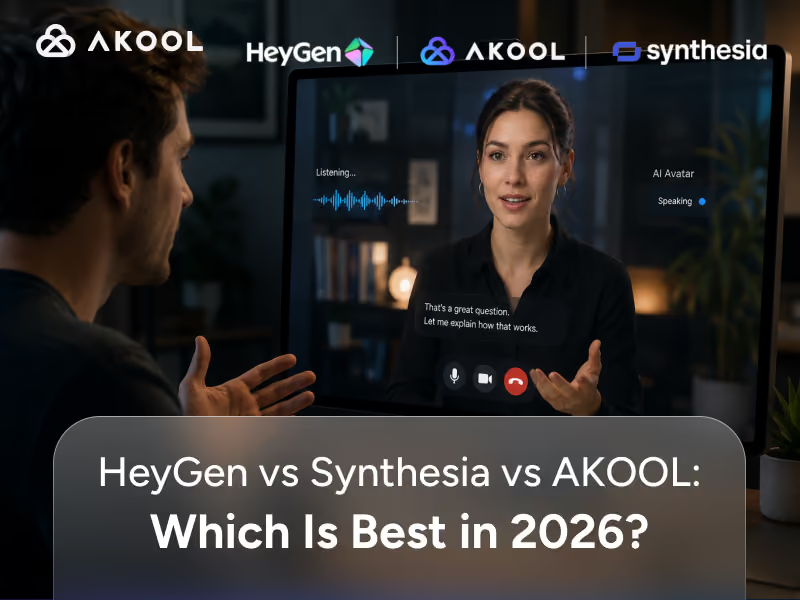
Choosing an AI avatar platform for your marketing and training content feels overwhelming when three strong contenders dominate the market. HeyGen, Synthesia, and AKOOL each bring something different to the table. This guide breaks down their strengths, limitations, and ideal use cases so you can make a confident decision.
AKOOL gives you real-time interactive avatars and a versatile suite of generative AI tools. HeyGen focuses on script-to-video workflows with polished presenter content. Synthesia caters primarily to corporate training and learning teams. Your choice depends on whether you need live engagement, marketing flexibility, or structured learning content.
Below, you'll find detailed platform overviews, feature-by-feature comparisons, and a side-by-side table to help you evaluate which option fits your workflow.
Key Takeaways: AKOOL vs HeyGen vs Synthesia
- AKOOL stands out with real-time streaming avatars that respond live to voice input, making it ideal for interactive customer engagement.
- HeyGen offers script-to-avatar video creation with 175+ language support and polished presenter output.
- Synthesia targets corporate learning teams with multilingual training content and slide-based editing.
- AKOOL's pooled credit system lets you access face swap, video translation, and avatars under one balance.
- All three platforms support custom avatar creation, but they differ significantly in live interaction capabilities.
AKOOL vs HeyGen vs Synthesia: Overview
What is AKOOL?
AKOOL is a generative AI platform that bundles over 20 tools including streaming avatars, face swap, video translation, and talking photos. Founded in 2022 in Palo Alto, AKOOL powers campaigns for Fortune 500 companies like Coca-Cola and McDonald's. The platform excels at real-time avatar interactions and multi-tool flexibility under a single pooled credit system.
AKOOL key features
- Real-time streaming avatars: Interactive AI avatars that see, speak, and respond in real time during live sessions.
- Face swap technology: Photorealistic face integration for marketing content and localized campaigns.
- Video translation: Support for 155+ languages with AI-powered lip sync and dubbing.
- Talking photos: Animate static images into speaking videos with natural expressions.
- API integration: Developer-ready API access for scaling avatar and video tools into existing systems.
AKOOL pros and cons
Pros:
- Real-time interactive avatars for customer support, training, and live events
- All tools share a pooled credit balance, maximizing flexibility across projects
- Up to 8K video output for commercial-grade production quality
Cons:
- The multi-tool dashboard has a learning curve, though tutorials help you get started quickly
- Language support covers 155+ languages compared to 175+ on some other platforms
- Credit consumption varies by tool, so monitoring usage helps optimize your balance
What is HeyGen?
HeyGen is an avatar video studio founded in 2020 in Los Angeles. The platform focuses on turning scripts into polished presenter-style videos with realistic lip sync. Companies like Zoom, SAP, and Reuters use HeyGen for marketing explainers and training content. HeyGen supports 175+ languages and offers an intuitive editor designed for non-video professionals.
HeyGen key features
- Avatar IV realism: Natural lip sync, micro-expressions, and body movement for presenter videos.
- Template library: 700+ stock avatars and creative templates for various content types.
- Translation workflows: Support for 175+ languages with automated dubbing and subtitles.
- Voice cloning: Record your voice and pair it with your avatar for consistent branding.
- Conversational AI editor: Describe what you want and let the platform draft your video plan.
HeyGen pros and cons
Pros:
- Intuitive editor that non-video professionals can navigate quickly
- Broad language coverage with 175+ supported languages
- Strong template library for marketing and social content
Cons:
- Credit consumption on Avatar IV is 20 credits per minute, so longer videos require more planning
- No real-time interactive avatar functionality for live engagement scenarios
- Business tier starts at a higher monthly threshold than entry plans
What is Synthesia?
Synthesia is an AI video platform founded in 2017, primarily serving corporate training and internal communications teams. The slide-deck-style editor helps learning and development professionals create structured content without filming equipment. Synthesia supports 160+ languages and emphasizes multilingual translation workflows for global teams.
Synthesia key features
- Express-2 avatars: AI presenters that gesture based on script content for natural delivery.
- One-click translation: Automatically translate videos into 80+ languages (Enterprise feature).
- SCORM export: Integrate training videos directly into learning management systems.
- Brand kits: Apply company colors, fonts, and logos to maintain consistency.
- Interactive elements: Add quizzes and CTAs to boost viewer engagement.
Synthesia pros and cons
Pros:
- Slide-based editor feels familiar to anyone who uses presentation software
- Strong SCORM export options for LMS integration (Enterprise tier)
- 160+ language support for multilingual corporate content
Cons:
- Content moderation has flagged legitimate training videos, causing production delays
- SCORM and advanced features require Enterprise-level access
- No real-time avatar interaction capabilities for customer service or live events
AKOOL vs HeyGen vs Synthesia: In-depth comparison
Real-time interactivity
AKOOL's streaming avatar technology lets you deploy interactive AI presenters that respond to voice input in real time. This makes AKOOL ideal for customer support, virtual events, and training sessions where live Q&A matters.
HeyGen and Synthesia focus on pre-recorded content creation. They produce polished videos from scripts, but neither supports live conversational interaction. If your workflow requires immediate audience response, AKOOL fills a gap the other two platforms do not address.
Avatar quality and realism
HeyGen's Avatar IV earns high marks for full-motion naturalness, micro-expressions, and lip sync accuracy. Reviewers consistently rate HeyGen as the leader for script-driven presenter realism.
AKOOL delivers comparable quality on static-frame skin texture and offers up to 8K output for commercial production. Synthesia's Express-2 avatars gesture naturally but tend toward a more corporate aesthetic. Your choice depends on whether you need broadcast-level polish or real-time interaction capabilities.
Language and translation support
HeyGen leads with 175+ language support and 70+ languages for lip-sync dubbing. This makes it the go-to option for global marketing teams localizing presenter videos.
Synthesia covers 160+ languages with one-click translation available on Enterprise plans. AKOOL supports 155+ languages with diffusion-based lip sync. For teams prioritizing breadth of language coverage, HeyGen offers the widest selection, though all three handle major world languages well.
API and developer integration
AKOOL offers a full REST API that developers can integrate into existing systems for scaling avatar creation, video translation, and face swap across marketing tech stacks. The API supports both video generation and real-time streaming avatar deployment.
HeyGen offers comprehensive API access with Python and JavaScript SDKs, webhook callbacks, and batch processing. Synthesia restricts API access to Enterprise customers, which limits experimentation for smaller teams. For developer flexibility, AKOOL and HeyGen both offer accessible entry points.
Use case focus
AKOOL targets enterprise marketing teams and content creators who need versatility across face swap, streaming avatars, and video production. Fortune 500 brands use AKOOL for personalized campaigns at scale.
HeyGen serves small businesses and marketing teams creating social content, explainer videos, and personalized outreach. Synthesia dominates corporate learning and development, with strong adoption among L&D and HR teams producing training modules. Match your primary content type to each platform's core strength.
Comparison table: The top AI avatar platform for enterprise video
Why AKOOL is the ideal choice for interactive brand engagement
AKOOL brings real-time interactivity that HeyGen and Synthesia simply do not offer. When your audience expects live responses during customer support, virtual events, or training sessions, streaming avatars create engagement that pre-recorded content cannot match.
The platform's multi-tool approach means you can produce face swap campaigns, video avatars, and translated content from one credit pool. This flexibility reduces the need to juggle multiple subscriptions while maintaining consistent quality across touchpoints.
For enterprise marketing teams looking to scale personalized visual content, AKOOL delivers studio-grade output with the agility to respond in real time. Explore AKOOL's pricing plans to find the right fit for your production volume and start creating content that connects with your audience.