
Quick guide: 8 AI video translation tools for global marketing teams
When you need to reach audiences in multiple languages, you need more than subtitles. You need video translation that sounds natural, looks convincing, and scales with your campaigns. That is where AI video translation tools come in.
AKOOL gives global marketing teams a neural lip-sync engine that supports 155+ languages, combined with voice cloning and a full API for enterprise-scale localization. Whether you are dubbing product demos, training videos, or advertising content, the right platform can cut weeks off your timeline and keep your message consistent across every market.
Here is a quick overview of the tools covered in this guide:
- AKOOL: Advanced neural lip-sync with 155+ language support and enterprise API integration
- HeyGen: Avatar-based video creation with dubbing capabilities
- Synthesia: AI avatar platform with multilingual voiceover generation
- Rask AI: Minute-based localization with voice cloning in 32 languages
- VEED: Browser-based editor with integrated translation features
- Colossyan: Training-focused platform with avatar regeneration
- ElevenLabs: Audio-focused dubbing with 29-language support
- Kapwing: General-purpose editor with basic dubbing functionality
How we chose the AI video translation tools for this guide
Finding the right video translation platform depends on how you plan to use it. A marketing team localizing ad campaigns has different needs than an L&D department rolling out training across regions. We evaluated these platforms based on criteria that matter most when you are producing multilingual video at scale.
- Lip-sync accuracy: Does the translated audio match the speaker's mouth movements? Drift and misalignment can distract viewers and undermine credibility.
- Language coverage: How many languages does the platform support? Global campaigns require broad coverage, including regional dialects.
- API access: Can you integrate the tool into existing workflows? Enterprise teams need programmatic access for batch processing and automation.
- Voice cloning quality: Does the dubbed version retain the speaker's tone, pacing, and personality? Or does it sound like a generic text-to-speech output?
- Workflow speed: How fast can you go from upload to downloadable output? Marketing teams working on tight deadlines need rapid turnaround.
- Enterprise features: Does the platform offer team collaboration, version control, security compliance, and scalable infrastructure?
The 8 AI video translation tools for global marketing teams
1. AKOOL: Advanced neural lip-sync for enterprise marketing
AKOOL delivers neural lip-to-speech synchronization that keeps mouth movements aligned with translated audio across 155+ languages. The platform uses diffusion-based models to create photorealistic facial dynamics, which means your localized videos look natural rather than dubbed.
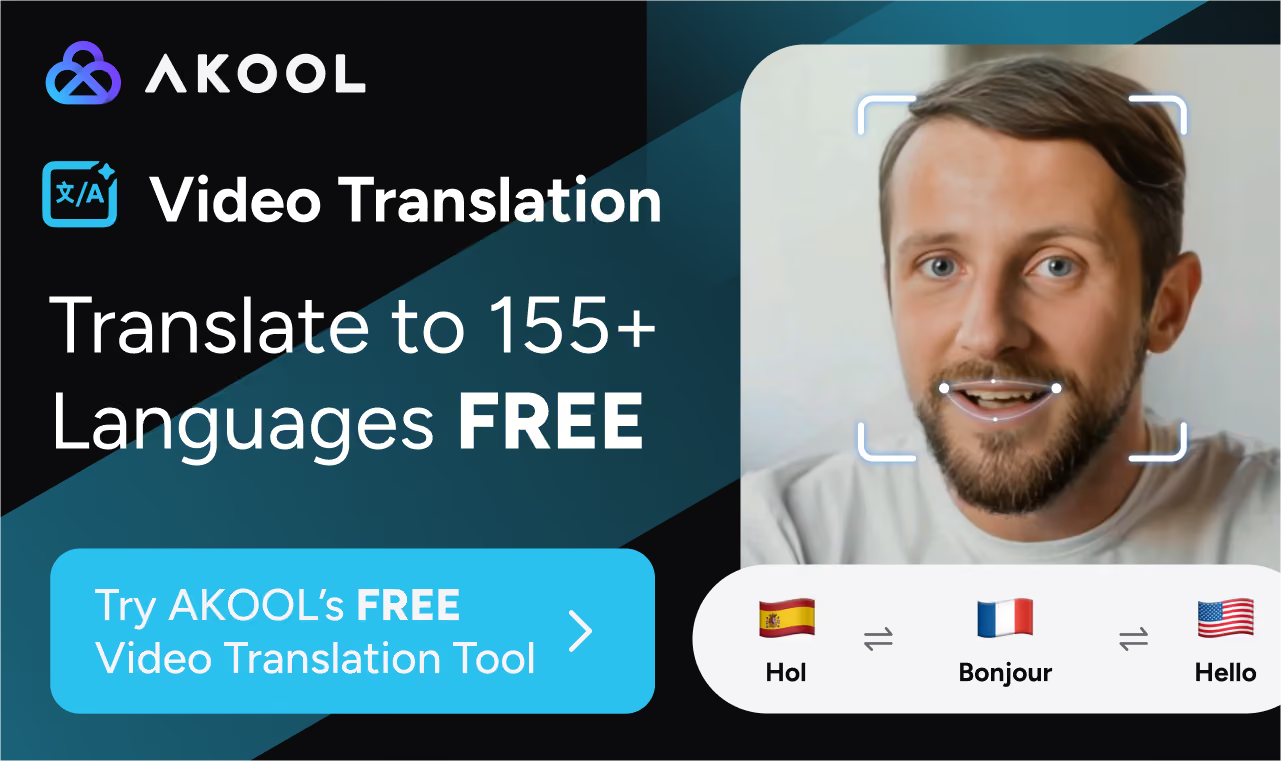
For marketing teams managing global campaigns, AKOOL offers a Video Translation API that integrates directly into existing production workflows. You can upload videos, select target languages, enable lip-sync, and receive localized versions without manual intervention. The API supports webhook notifications, batch processing, and custom voice mappings for professional translation control.
What sets AKOOL apart is the combination of capabilities in a single platform. Beyond video translation, you get access to face swap technology, streaming avatars, voice cloning, and background change tools. This makes it possible to produce entire campaigns from one dashboard rather than juggling multiple subscriptions.
AKOOL features
- Neural lip-sync: Precise phoneme alignment ensures translated speech matches facial movements frame by frame
- 155+ language support: Covers major markets plus regional dialects for true global reach
- Multi-speaker detection: Identifies and translates multiple speakers in a single video accurately
- Voice cloning: Preserves the original speaker's tone and delivery across languages
- Enterprise API: Full programmatic access with webhook support and batch processing capabilities
- Proofreading editor: Make adjustments to translations before final rendering
AKOOL pros and cons
Pros:
- High-fidelity lip-sync that maintains natural appearance across all supported languages
- All-in-one platform reduces the need for multiple AI video tools
- Trusted by Fortune 500 companies for enterprise-scale campaigns
Cons:
- Videos over 60 seconds require segmentation for API processing
- Advanced features require familiarization with the platform's workflow
- Some regional dialects may need manual voice selection for optimal results
2. HeyGen: Avatar-based dubbing with voice cloning
HeyGen focuses on avatar-based video creation with integrated dubbing capabilities. The platform offers 175+ language support and includes voice cloning that preserves speaker identity. Their translation engine includes two modes: Speed for quick turnaround and Precision for context-aware accuracy.
The platform works well for teams already producing avatar-led content. If you create videos within HeyGen's editor, adding multilingual versions is straightforward. The lip-sync technology uses their Avatar IV system to maintain alignment between dubbed audio and on-screen movements.
HeyGen features
- Dual translation modes: Choose between fast output or nuanced translation
- Voice cloning: Retains speaker characteristics across language versions
- SCORM export: Useful for L&D teams delivering training through learning management systems
HeyGen pros and cons
Pros:
- Wide language coverage with 175+ options
- Integrated video creation suite for avatar-led content
- Free plan includes limited video access for testing
Cons:
- Primarily designed for videos created within the platform
- Premium avatar features use a separate credit allocation
- May require additional setup for external video uploads
3. Synthesia: Enterprise training with AI avatars
Synthesia built its reputation on AI avatar video creation for enterprise training. The platform generates native-language versions by re-rendering avatar lip movements to match translated audio. This approach eliminates the drift issues that affect traditional dubbing.
The platform supports 140+ languages and includes enterprise features like SSO, team management, and brand kits. For L&D departments, Synthesia offers a workflow where you create content once and generate versions for global teams automatically.
Synthesia features
- Avatar lip-sync re-rendering: Generates new video where avatars speak each language natively
- Enterprise security: SOC 2 compliance and team collaboration tools
- Large avatar library: Includes options for custom avatar creation
Synthesia pros and cons
Pros:
- Native avatar regeneration eliminates lip-sync issues entirely
- Strong enterprise feature set for large organizations
- Consistent presenter appearance across all language versions
Cons:
- Dubbing works primarily for videos created within Synthesia
- Custom avatar creation requires professional filming
- Entry-level plans may not include full dubbing functionality
4. Rask AI: Minute-based localization for content teams
Rask AI offers a straightforward translation workflow: upload video, select languages, download dubbed versions. The platform includes voice cloning across 32 languages and collaborative workspace features for team review.
The minute-based pricing model works for teams that produce content in batches rather than continuously. You can invite colleagues to review translations before final rendering, which catches errors before they reach production.
Rask AI features
- 135+ language support: Covers major global markets
- Collaborative workspace: Team members can review and edit translations inline
- API access: Automate dubbing pipelines for high-volume production
Rask AI pros and cons
Pros:
- Simple upload-and-translate workflow
- Team collaboration features reduce review cycles
- API available for automation
Cons:
- Lip-sync uses double the minute allocation
- Visual alignment can drift on longer clips
- No free plan available for testing
5. VEED: Browser-based editor with translation add-on
VEED positions itself as an all-in-one video editing platform with translation features included. The browser-based interface handles trimming, subtitling, and dubbing in a single workflow. This approach appeals to teams that want editing and localization in one tool.
The translation quality is adequate for social media content and quick marketing clips. For longer or more polished content, the lip-sync quality may not meet professional standards.
VEED features
- Integrated editing: Cut, subtitle, and translate without switching tools
- 125+ languages: Broad coverage for international content
- Social media exports: Format outputs for different platforms automatically
VEED pros and cons
Pros:
- Combines video editing with translation in one interface
- Browser-based access requires no software installation
- Useful for quick social media localization
Cons:
- No free dubbing option available
- Lip-sync accuracy varies by content length
- Voice cloning results may not match original speaker closely
6. Colossyan: AI avatar regeneration for training
Colossyan targets training and e-learning content with its avatar-based translation approach. The platform creates videos with AI avatars that speak each language natively, avoiding the lip-sync challenges of dubbing existing footage.
For organizations building multilingual training programs, Colossyan offers update efficiency that traditional dubbing cannot match. Change the source script and all language versions regenerate automatically.
Colossyan features
- Native avatar generation: Avatars speak each language with natural mouth movements
- 80+ languages: Covers major business communication needs
- Automatic updates: Script changes propagate to all language versions
Colossyan pros and cons
Pros:
- Eliminates lip-sync issues through native generation
- Efficient update workflow for evolving content
- Brand consistency across all language versions
Cons:
- Only works with AI-generated avatar content
- Cannot translate existing human-filmed footage
- Enterprise-focused pricing structure
7. ElevenLabs: Audio-focused dubbing with studio-grade voices
ElevenLabs focuses on voice quality above all else. The platform produces natural-sounding English output with breath patterns, micro-pauses, and emotional inflection that other tools struggle to match. The Dubbing Studio lets you edit individual segments before regenerating.
The limitation is scope: ElevenLabs supports 29 languages for dubbing, which covers major markets but excludes many regional options. The platform also produces audio-only output, meaning you handle lip-sync separately.
ElevenLabs features
- Studio-grade voice realism: Emotional nuance preserved across translations
- Segment-level editing: Adjust timing, pronunciation, and phrasing before final render
- API access: Programmatic dubbing for automated workflows
ElevenLabs pros and cons
Pros:
- Voice quality stands out among AI dubbing tools
- Granular editing controls for professional output
- API available for integration
Cons:
- Only 29 languages supported
- Audio-only output requires separate lip-sync solution
- Per-language billing structure adds complexity
8. Kapwing: General-purpose editor with basic dubbing
Kapwing works as a lightweight video editor with translation features added. The platform handles subtitling, formatting for social platforms, and basic dubbing in a single browser-based workflow. For creators who already use Kapwing for editing, adding translation keeps everything in one place.
Quality limits become apparent on longer content. Voice quality degrades past five minutes, and lip-sync alignment drops after about three minutes of continuous footage.
Kapwing features
- Integrated workflow: Edit, subtitle, and dub without switching tools
- 40+ languages: Covers common localization needs
- Social format exports: Resize outputs for TikTok, Instagram, and other platforms
Kapwing pros and cons
Pros:
- Accessible entry point for basic localization
- Free tier available for testing
- All-in-one editing and translation
Cons:
- Quality degrades on clips longer than five minutes
- Lip-sync accuracy drops past three minutes
- Not suitable for enterprise or broadcast content
Comparison table: AI video translation tools for marketing
What makes neural lip-sync different from traditional dubbing?
Traditional dubbing replaces audio while leaving video untouched. This creates misalignment between what viewers hear and what they see. The speaker's mouth forms words in one language while the audio plays in another. Human brains notice this disconnect, even subconsciously, which can reduce trust and engagement.
Neural lip-sync takes a different approach. Platforms like AKOOL use diffusion-based models to analyze facial movements frame by frame, then adjust mouth shapes to match the translated audio. The result is video where the speaker appears to be saying the words in the target language naturally.
For marketing teams, this distinction matters. Localized ads and product videos need to feel authentic to each market. When lip movements match the audio, viewers focus on the message rather than the obvious signs of dubbing. This is especially important for face-led content like testimonials, executive communications, and branded video campaigns.
How do API workflows help enterprise marketing teams scale?
Marketing teams managing global campaigns often need to localize dozens or hundreds of videos simultaneously. Manual workflows—uploading each video, selecting languages, downloading outputs—do not scale efficiently. API access changes this equation.
With AKOOL's Video Translation API, you can build automated pipelines that process videos in batch. Set source and target languages, enable lip-sync, configure voice mappings, and let the system handle the rest. Webhook notifications alert your team when videos are ready, and you can integrate the entire workflow with your existing content management systems.
This approach reduces localization from weeks to hours. Instead of assigning team members to repetitive upload-and-download tasks, you free them to focus on creative strategy and quality review. For enterprises launching campaigns across multiple markets simultaneously, API integration is not a nice-to-have—it is a necessity.
Why AKOOL is the top AI video translation platform for marketing
AKOOL earns the top position because it combines capabilities that other platforms split across multiple tools. The neural lip-sync engine handles 155+ languages with precision that keeps facial movements aligned frame by frame. Voice cloning preserves speaker identity so localized videos sound like the original presenter speaking a new language, not a generic AI voice reading a translation.
For enterprise marketing teams, the API integration makes large-scale localization practical. You can process entire campaign libraries programmatically, with webhook notifications keeping your team informed without manual monitoring. The platform also includes realistic avatars, face swap, and background change tools—giving you a full production suite rather than a single-purpose translator.
Global brands already trust AKOOL for high-stakes campaigns. Logitech used the platform for multilingual webinar series. Canon showcased an AI photo booth powered by AKOOL at internal events. When your video localization needs to perform at Fortune 500 standards, AKOOL delivers the quality and scalability to match.
Ready to see how AKOOL can accelerate your global video strategy? Try the video translation tool and experience neural lip-sync technology firsthand.