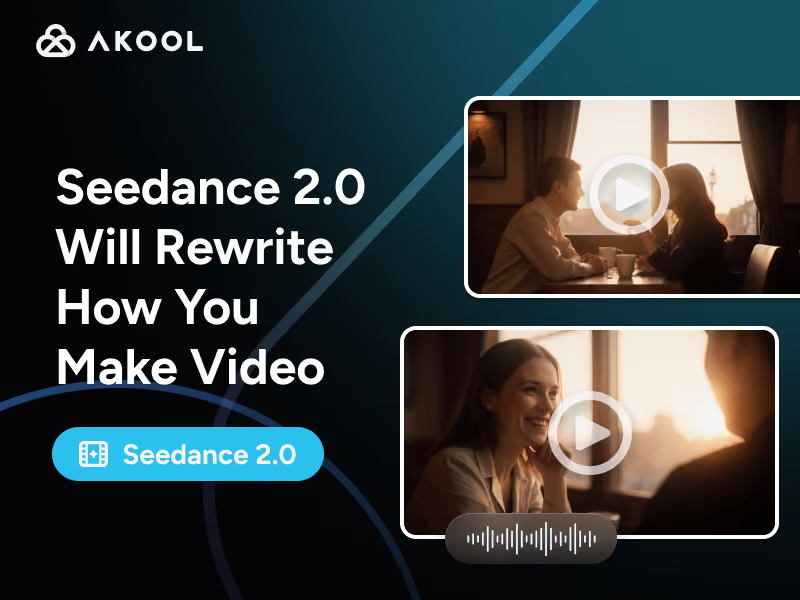
Des simples clips IA à un moteur vidéo basé sur des références
Votre fil d'actualité est probablement inondé de Seedance 2.0 en ce moment. La plupart n'ont pas été réalisés par des studios d'effets visuels, et c'est bien là tout l'intérêt.
Alors que tout le monde débat sur Hollywood, la question la plus urgente pour la plupart des gens est tout autre :
Qu'adviendra-t-il de la publicité, du contenu et de la création vidéo quotidienne lorsque ce modèle se généralisera ?
Seedance 2.0 est le modèle vidéo IA de nouvelle génération de ByteDance modèle vidéo IA capable de transformer du texte, des images, de la vidéo et de l'audio en clips de 15 secondes synchronisés avec l'audio, dotés de mouvements et de prises de vue réalistes.
Il ne s'agit pas simplement d'une « vidéo IA légèrement améliorée ». Le système se comporte davantage comme un moteur créatif autonome que comme une machine à sous à prompts. Et alors que des plateformes comme Akool s'apprêtent à l'intégrer, les implications pour le marketing et les créateurs du quotidien sont considérables.
Pourquoi Seedance 2.0 marque un tournant décisif
Que se passe-t-il lorsque la « production cinématographique » se résume à un court brief et quelques références ?
Nous ne parlons pas seulement d'une génération de vidéo par IAplus abordable. Nous assistons en temps réel à la réduction de l'écart de compétences entre le « néophyte » et le « réalisateur formé ».
Illustrons cela par du concret.
Les créateurs indépendants peuvent désormais atteindre une qualité quasi professionnelle en un après-midi
Le viral Seedance 2.0 Les clips de catastrophes et de combats que vous voyez en ligne ressemblent étrangement à des productions cinématographiques à budget moyen : physique cohérente, débris lourds, éclairage crédible, chorégraphie multi-plans.
Il y a douze mois, ce type de résultat impliquait :
- Un script découpé en étapes narratives
- Des storyboards et de la prévisualisation
- Plusieurs plans de 3 à 5 secondes rendus séparément
- Un spécialiste du compositing pour corriger les bugs physiques et les raccords
- Un monteur pour assembler et fluidifier le tout en une seule séquence
La majeure partie de l'effort consistait à maîtriser les outils, et non à façonner les idées.
Désormais, vous pouvez obtenir un résultat similaire en une fraction du temps :
- Rédigez un prompt structuré décrivant le rythme, les mouvements de caméra et le ton
- Joignez un petit ensemble de images de référence, clips vidéo et fichiers audio
- Laissez Seedance 2.0 planifier les plans et générer une séquence assemblée et synchronisée avec l'audio en une seule fois
Les chiffres varient selon les cas d'usage, mais le ressenti pratique reste le même :
La production n'est plus le goulot d'étranglement. C'est la réflexion créative qui le devient.
Seedance 2.0 est déjà disponible dans certaines régions de Chine via Dreamina / Doubao et auprès de partenaires en accès anticipé. Pour le reste du monde, nous vivons ce moment singulier où le public découvre des générations avant même que le modèle ne soit entièrement déployé sur les principaux outils.
Sous le capot de Seedance 2.0
Un pipeline de génération axé sur la planification
La plupart Générateurs de vidéo par IA se comportent aujourd'hui comme une version améliorée de la diffusion :
Vous rédigez un long prompt, lancez la génération, obtenez un clip et procédez par itérations manuelles. Si vous souhaitez obtenir une structure cinématographique, vous devez compenser par des listes de plans, des notes de caméra et une étape de montage distincte.
Seedance 2.0 semble insérer une couche de planification avant même de dessiner la moindre image. Les documents de lancement de ByteDance et les tests tiers suggèrent qu'il effectue :
- Une analyse multimodale de la scène (que contiennent le texte, les images, la vidéo et l'audio ?)
- Une planification des plans (combien de temps forts, dans quel ordre, quelle durée pour chacun)
- Une inférence de caméra (choix des mouvements, rendu focal, cadrage)
- Une logique de mouvement (comment les corps, les accessoires et l'environnement se déplacent dans l'espace)
Ensuite, il procède au rendu.
C'est pourquoi :
- Les mouvements de caméra semblent délibérés plutôt qu'aléatoires
- Le rythme ressemble à un montage plutôt qu'à un plan unique instable
- Les séquences donnent l'impression que « quelqu'un a fait des choix » et non que « le modèle a tâtonné entre les images »
En d'autres termes, Seedance 2.0 ne se contente pas de mapper du texte vers des pixels. Il déduit d'abord une grammaire cinématographique simplifiée.
Un moteur vidéo central plus performant
La planification ne vaut rien si le modèle sous-jacent ne peut pas l'exécuter.
Sous le capot, Seedance 2.0 maîtrise tout simplement mieux les fondamentaux que les outils vidéo IA précédents :
- Physique: le poids, l'élan et les collisions semblent réels plutôt que flottants
- Scènes complexes: les sujets multiples, les mouvements superposés et la profondeur restent cohérents en 1080p/2K
- Éclairage: l'illumination globale et les reflets sur les surfaces ressemblent moins à des bugs qu'à une scène réelle
- Respect des instructions: il reste plus fidèle à vos actions et contraintes décrites que les systèmes texte-vidéo classiques
Le revers de cette puissance est la controverse que vous observez déjà :
- Les studios hollywoodiens et la Motion Picture Association ont envoyé des mises en demeure concernant les générations de type propriété intellectuelle.
- Les filtres de sécurité et de référence se durcissent en temps quasi réel : certains prompts et combinaisons de références qui fonctionnaient la semaine dernière sont désormais bloqués.
Alors oui, le modèle de base est assez puissant pour soulever de sérieuses questions juridiques et éthiques. C'est précisément pour cette raison que son potentiel créatif est pris au sérieux.
Contrôle complet du spectre texte, image, vidéo et audio
C'est l'atout que la plupart des gens sous-estiment.
Seedance 2.0 est un modèle quadrimodal. Il ne se contente pas d'utiliser des images comme simple conditionnement lumineux ; il prend entièrement en charge :
- Texte pour l'intention de la scène
- Images pour le rendu, le style et la composition
- Clips vidéo pour le mouvement et le comportement de la caméra
- Audio pour le rythme, l'ambiance et la synchronisation
Vous pouvez intégrer, en une seule exécution :
- Jusqu'à neuf images, trois clips vidéo, et trois pistes audio, pour un total de 12 références
- Même les storyboards textuels, que le modèle peut traiter comme un guide structurel plutôt que comme une simple décoration
Un modèle mental utile qui émerge chez les praticiens :
- intention
- apparence
- mouvement
- rythme
En traitant chaque entrée comme une tâche spécifique plutôt que de tout soumettre en bloc, Seedance 2.0 se comporte davantage comme un assistant méticuleux qui respecte vos références que comme un générateur d'idées aléatoires.
Pour les marketeurs et les fondateurs, cela signifie moins de hasard dans les prompts et une création vidéo par IA plus précise, basée sur des références, sans avoir à passer ses journées dans un logiciel de montage.
Ce que cela signifie pour le marketing et la croissance
D'un point de vue marketing, Seedance 2.0 n'est pas « juste une énième démo impressionnante ». Cela change structurellement ce que les petites équipes sont capables de produire.
Spots publicitaires haut de gamme
Les spots haut de gamme en qualité 2K nécessitaient auparavant :
- Des tournages en studio ou en extérieur
- Une équipe maîtrisant l'éclairage, le mouvement et la continuité
- Une chaîne de post-production pour le compositing et le design sonore
Seedance 2.0 peut désormais produire des vidéos de 10 à 15 secondes, multi-plans et synchronisées sur l'audio, dans un style « spot TV » en combinant :
- Une image de produit ou de marque pour le style
- Une ou deux références de mouvement pour la caméra et le rythme
- Une base musicale ou une voix off pour structurer l'émotion
Il vous faut toujours du goût et un brief clair. Mais vous n'avez plus besoin d'un studio à chaque fois que vous voulez un rendu publicitaire.
Publicités soignées inspirées de l'UGC
À l'autre bout du spectre, le contenu de style UGC était autrefois :
- Soit vraiment « low-fi » (authentique mais difficile à contrôler)
- Soit « inspiré de l'UGC » mais manifestement tourné en studio
Seedance 2.0 vous permet de :
- Utiliser des références informelles (clips filmés à la main, photos prises dans une chambre)
- Conserver cet aspect spontané et réaliste
- Ajuster l'éclairage, le cadrage et le rythme juste ce qu'il faut pour la publicité
Pour les spécialistes du marketing à la performance, cela signifie plus de variantes publicitaires testées chaque semaine, avec moins de frictions entre le style « UGC » et le rendu « soigné ». Pour les agences, cela signifie une productivité accrue. Pour les marques, cela permet de créer des scénarios simulés et des histoires « comme si elles avaient été filmées » qui auraient été financièrement inaccessibles il y a six mois.
Il existe des contraintes :
- La fonctionnalité de référence de personnes réelles est activement restreinte, ce qui limite les cas d'usage nécessitant une identité persistante, comme les influenceurs entièrement générés par IA ou les personnages de séries au long cours.
Mais même dans ces limites de sécurité, l'outil est déjà exploitable pour une grande partie du travail publicitaire : récits produits, concepts narratifs et séquences explicatives basées sur des scénarios.
Les compétences requises évoluent : il ne s'agit plus de « savoir dompter l'outil », mais de « savoir quoi tester et pourquoi ».
Utilisateurs quotidiens et histoires sur mesure
Pour les utilisateurs quotidiens, Seedance 2.0 ne se résume pas à la publicité, c'est avant tout du cinéma personnel.
Une fois ce modèle largement disponible dans les outils grand public, il devient facile de :
- Créer des films d'anniversaire cinématographiques à partir de quelques photos et d'une chanson
- Transformer un court texte sur le monde imaginaire de votre enfant en un mini-film
- Générer des scènes dramatiques ou des moments de style anime juste pour le plaisir
La distance entre l'« idée » et la « scène visualisée » se réduit encore. Le divertissement cesse d'être uniquement quelque chose auquel on s'abonne pour devenir quelque chose que l'on compose pour des personnes et des moments précis.
Ce changement émotionnel — s'éloignant du contenu produit en masse vers des visuels personnalisés et intimes — est sans doute plus important que n'importe quelle avancée technique isolée.
Voir Seedance 2.0 en action
Pour un aperçu concret des performances de Seedance 2.0 au sein d'AKOOL, un rédacteur a partagé son expérience de création vidéo avec le modèle. L'article détaille son processus créatif et les principaux enseignements tirés de l'utilisation de Seedance 2.0 sur la plateforme AKOOL.
Lire l'expérience complète de Seedance 2.0 sur MiraLab
Conclusion
Seedance 2.0 n'est pas parfait. Les filtres de sécurité évoluent, les politiques d'utilisation sont en constante mutation et le paysage juridique concernant la propriété intellectuelle et le droit à l'image est loin d'être stabilisé.
Mais il marque clairement une transition :
- Du brut Génération de vidéo par IA vers une orchestration cinématographique automatisée
- Du hasard des prompts à la direction basée sur des références
- De la pénurie de production à la pénurie d'imagination
Alors que des plateformes comme Akool et d'autres s'apprêtent à intégrer Seedance 2.0 dans leurs écosystèmes, la vraie question n'est plus de savoir si la vidéo de haute qualité sera démocratisée : cela se produit déjà sous nos yeux chaque jour.
La vraie question est de savoir à quelle vitesse vous adapterez vos flux de travail, votre marketing et vos habitudes créatives à un monde où :
- N'importe qui peut réaliser une scène crédible
- La stratégie et le goût déterminent les résultats
- Et où l'avantage ne réside plus dans la possession de matériel, mais dans la capacité à savoir quoi demander au modèle.
Nous sommes dans une phase de pré-lancement. Les outils évoluent encore. Mais la direction est claire.
Si la publicité, le contenu ou la narration vous intéressent, Seedance 2.0 n'est pas un bruit de fond. C'est le front météorologique qui arrive droit sur vous.